
Test Code: 7998
CPT Code(s): 85014, 85018 *CPT Code is subject to a Medicare Limited Coverage Policy and may require a signed ABN when ordering.
Alternative Name(s): Hgb, HCT and HGB
Methodology: Electronic Cell, Sizing/Cytometry/Microscopy
Reference Range(s): See Individual Test
Clinical Significance: Hemoglobin and Hematocrit - Usual method for determining anemia. Used to calculate indices.
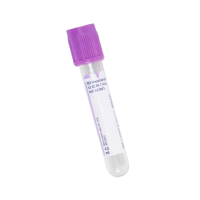
Supply: T59 - Lavender 4mL Blood Tube
Preferred Specimen: Whole blood from a full EDTA (lavender-top) tube *See below for alternative specimen.
Note: If drawn with lead testing, EDTA (tan-top) is required.
Preferred Volume: Microtainer 0.5 mL / 1 mL whole blood EDTA tube
Collection Instructions: Maintain specimen at room temperature. Do not refrigerate. If multiple draw, collect EDTA (lavender-top) tube last. Traumatic draw can introduce thromboplastin and trap WBC and platelets. Refrigeration can precipitate fibrin and trap WBC and platelets.
Transport Container: EDTA (lavender-top) tube
Transport Temperature: Room Temperature
Specimen Requirements: Maintain specimen at room temperature. Do not refrigerate. If multiple draws, collect EDTA (lavender-top) tube last. Traumatic draw can introduce thromboplastin and trap WBC and platelets. Refrigeration can precipitate fibrin and trap WBC and platelets.
Specimen Stability:
- Room temperature: 48 hours
- Refrigerated: 48 hours (may cause platelet clumping)
- Frozen: Unstable
Rejection Criteria:
- Received frozen
- Hemolysis
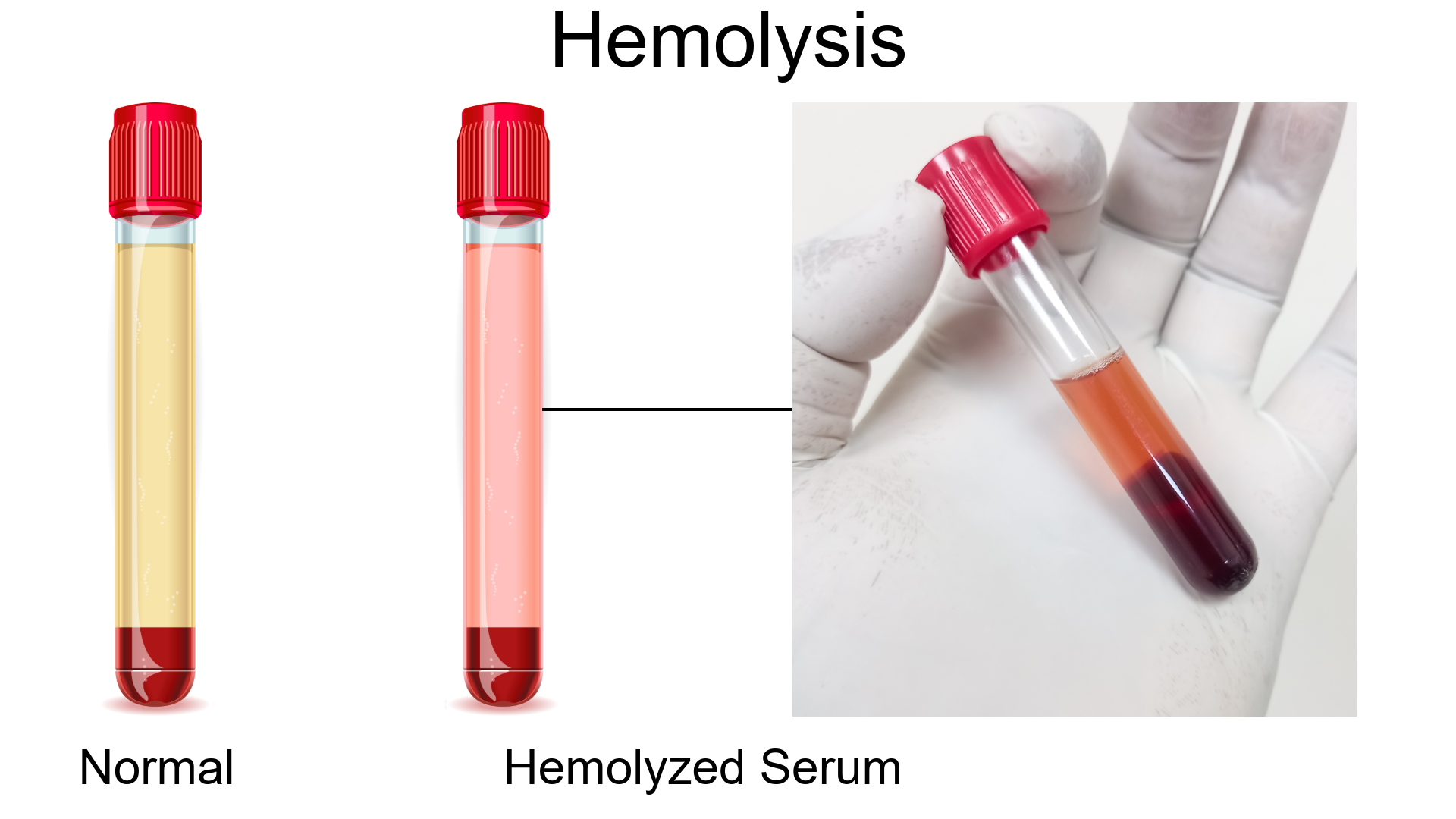
- What are hemolyzed specimens?
-
Hemolysis occurs when the red cells are damaged during sample collection causing them to rupture. Hemolyzed serum or plasma is pale pink to red rather than the normal clear straw or pale-yellow color.
-
- What causes a specimen to be hemolyzed?
- Mixing tubes too vigorously
- Placing tubes in the refrigerator without allowing 30 minutes at room temperature for complete clotting
- Exposure to heat or in a refrigerator that is too cold
- Using a needle with too small of a bore necessary for the venipuncture
- Using too large a tube when using a butterfly needle
- Not allowing sufficient time for alcohol to dry on puncture site
- Leaving the tourniquet on for longer than one minute
- How can hemolyzed specimens be prevented?
- For routine collections, use a 20–22-gauge needle
- Do not remove the needle from the vein with the vacuum tube engaged
- Do not collect a specimen in a hematoma
- Do not centrifuge the specimen for a prolonged period of time
- Draw the sample gently and evenly
- What are hemolyzed specimens?
- Clotted
Alternative Specimen(s): Whole blood from a full EDTA (tan-top) tube
For additional supply or collection device information, please contact DLO's Customer Service at (800) 891-2917, option 2.
The CPT codes provided are based on AMA guidelines and are for informational purposes only. CPT coding is the sole responsibility of the billing party. Please direct any questions regarding coding to the payor being billed.