
Mycoplasma Hominis/Ureaplasma Culture
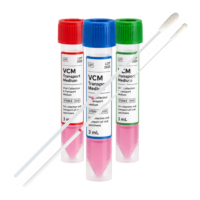
Test Code: 871
CPT Code: 87109
Methodology: Culture
Clinical Significance: Ureaplasma urealyticum and Mycoplasma hominis are primarily associated with genital tract colonization and disease in adults and respiratory tract colonization and disease in newborns. Though controversial, these organisms have been associated with endometritis, chorioamnionitis, premature rupture of membranes, stillbirth, premature birth, low birth weight, post-partum infections, and infertility. Of particular concern is the causal relationship between central nervous system infections in the premature newborn and U. urealyticum.
Supply: #S06 VCM-Cervical or Supply #S09 VCM-urethral *Transport Medium will vary in lid color
Preferred Specimen:
- 3 mL or 1 swab urogenital (vaginal, cervical, urethral swabs, or vaginal secretions) collected in a VCM tube or FDA approved equivalent transport medium
Alternative Specimen:
- Urine collected in VCM tube or FDA approved equivalent transport medium
- Infant (<1 year old) Respiratory Sample (sputum, bronchial washing/BAL, tracheobronchial secretions, nasopharyngeal or throat swabs) collected in: VCM tube or FDA approved equivalent transport medium
Urogenital:
Collect in VCM medium tube.
Cervical Collection
- Do not use lubricant during procedure.
- Remove mucous from the ectocervix with the large Rayon swab provided
- Discard the swab after use and use the smaller swab to obtain exudate from the cervical glands and os
- Rotate the swab in the cervical 3-5 seconds
- Remove swab carefully avoiding the vaginal wall and place the swab in the VCM transport tube, breaking the shaft at the molded mark
- The length of the swab should fit easily into the tube. Do not force the swab into the tube
- Recap tightly. Store on dry ice and send to the laboratory as soon as possible
Urethra Collection
- Collect specimens at least 2 hours before patient has urinated
- Insert collection swab into urethra 2 to 4 cm and rotate gently leaving it in place 1 to 2 seconds
- Withdraw/remove swab carefully and place in the VCM transport tube, breaking the shaft at the molded mark
- The length of the swab should fit easily into the tube. Do not force the swab into the tube
- Recap tightly. Store on dry ice and send to the laboratory as soon as possible
Urine:
- Centrifuge urine at 3000RPM for 15 minutes
- Suspend sediment in VCM medium tube
- If the specimen is not centrifuged submit a 1:1 volume of urine in VCM
- Recap tightly. Store on dry ice and send to the laboratory as soon as possible
Respiratory (<1 years of age only) –
- Specimens other than Nasopharyngeal submit a 1:1 volume of sample in VCM (See below for Nasopharyngeal collection instructions)
- Recap tightly. Store on dry ice and send to the laboratory as soon as possible
Nasopharyngeal Collection:
- Obtain specimen using only the mini-tip swab provided with kit #S05
- Push forward using gentle downward pressure to keep the swab on the floor of the nasal cavity until the tip reaches the posterior wall of the nasopharynx
- Rotate gently for a few seconds and remove swab and place in the VCM medium
- Break the swab shaft at the molded mark
- Recap tightly. Store on dry ice and send to the laboratory as soon as possible
Preferred Volume: 3 mL or 1 swab
Transport Container: VCM Tube;
DO NOT USE M4RT - THE ROOM TEMPERATURE FORMULA
Transport Temperature: Frozen on Dry Ice (–70°C); Ship on dry ice
Specimen Stability:
Room Temperature: Unacceptable
Refrigerated: 48 hours
Frozen at -20° C: Unacceptable
Frozen at –70° C: 30 days
Rejection Criteria:
- Molecular transport systems
- Wooden-shaft and calcium alginate swabs
- urine containing preservatives
- Raw specimens
- Specimens received in M4RT transport media
- Respiratory specimens from patients > 1 year old
- Specimen submitted in formalin
For additional supply or collection device information, please contact DLO's Customer Services at (800) 891-2917, option 2.
The CPT codes provided are based on AMA guidelines and are for informational purposes only. CPT coding is the sole responsibility of the billing party. Please direct any questions regarding coding to the payor being billed.